

Nancy Sabin Wexler, PhD, has devoted her career to finding treatments and a cure for Huntington’s disease. She pioneered groundbreaking fieldwork that, in 1983, enabled the identification of a genetic marker for HD — a discovery that helped launch the Human Genome Project — and in 1993, led to the HD-causing gene itself. She has presided over the Huntington’s Disease Foundation (HDF) for over forty years and has been an eloquent voice for patients in genetic research and an insistent advocate for ethical use of genome sequence information.
Assisted by writer Mark Hampton and by her sister, writer and historian Alice Wexler, Nancy has recently published a memoir of her journey as both an HD scientist and a woman navigating life at risk for HD, and finally, as a person living with the disease she had hoped to cure. With Alice’s assistance, HD Insights had the opportunity to ask Nancy about her hopes for the book and for the future of HD research.
Thank you for this opportunity to help in the introduction of your book! What inspired you to write it?
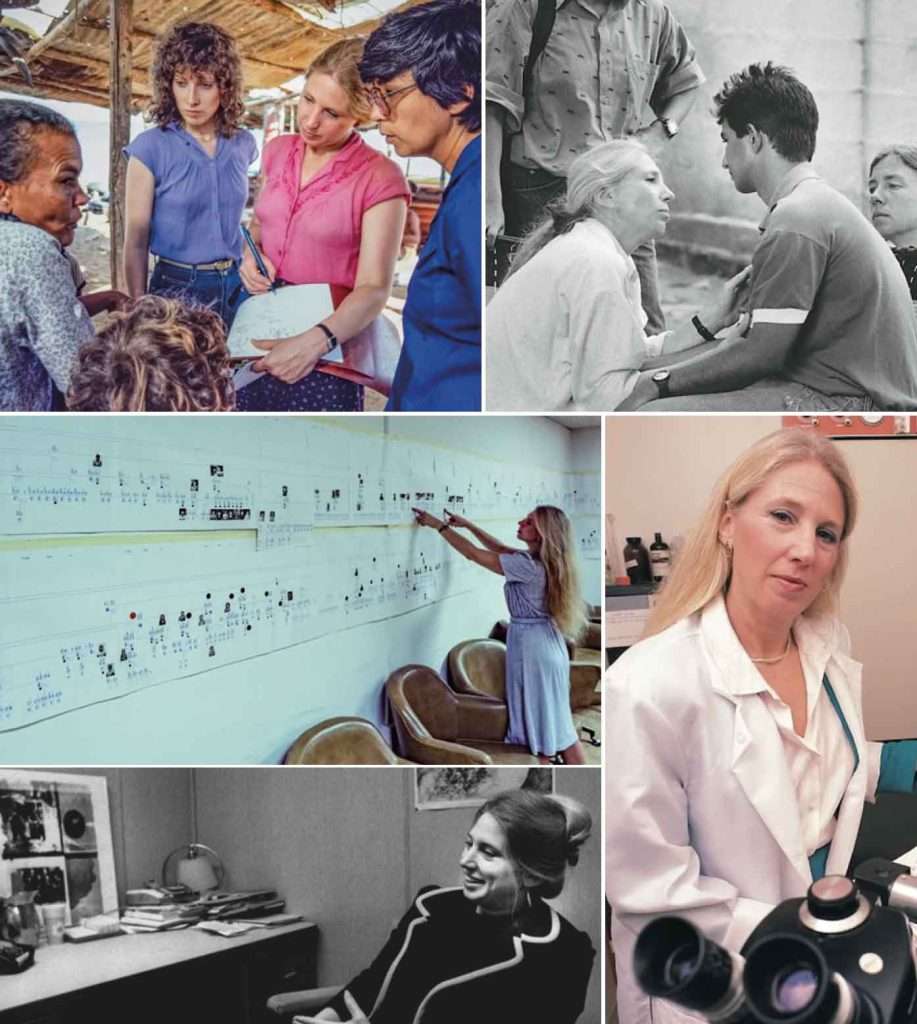
Nancy: I had long wanted to tell the story, from my own perspective, of the 22-year collaboration between the Venezuelan Huntington’s disease community — the largest family in the world with HD — and the researchers, clinicians, postdocs, and medical students from many countries who came with us to Venezuela for several weeks each year from 1981 through 2002. I wanted to honor the Venezuelans and talk about the joys and sorrows of working with them.
I also wanted to explore in writing how Huntington’s affected my life more personally, in hopes that my story might be helpful to others at risk and living with HD.
I wanted to write about some of my less well-known activities too — for instance, as director of a landmark HD Congressional Commission in the 1970s, which helped set the agenda for many subsequent initiatives, and chairing ELSI (Ethical, Legal, and Social Issues Working Group of the Human Genome Project) in the 1990s.
But I was always so busy! It was only with the onset of the pandemic, which happened to coincide with my diagnosis of HD, that I finally had time to focus on this book which had been germinating in my brain for the past twenty-five years!
What is the format of the book?
Dr. Wexler: I’d say the book lies somewhere between an autobiography and a memoir, since it is broader than a memoir but still focuses on our work in Venezuela, which was at the center of my life for over two decades.
What do you hope HD researchers will take from this book?
Dr. Wexler: I hope researchers will come away from the book with a feeling for the joys and rewards of doing scientific research, with all its challenges and frustrations. I hope they will sense how exciting and emotionally fulfilling biomedical research and science can be. And I hope they will feel inspired to collaborate, since the pleasure and challenge of collaboration is also a major theme of the book.
I also hope our attitude of regarding the people we studied not simply as research subjects, but as participants and collaborators in the research will encourage this attitude in others. And I hope my book will inspire some readers to join our efforts to understand and cure Huntington’s disease, and to support Venezuelan families with HD.
What about the key takeaways for at-risk individuals and families?
Dr. Wexler: That facing HD head-on can be a driving force for progress; that becoming engaged with others in the struggle with Huntington’s can be fulfilling, both socially and emotionally. That secrecy and silence about HD within families can make things harder for family members, and that speaking openly and honestly about it can be therapeutic. That decisions about presymptomatic testing are hugely complicated, and there is no one right decision for everyone.
What’s right for me may not be right for you.
That there are many resources out there, including books like mine, to help you navigate this illness— you do not have to reinvent the wheel or do it by yourself. You are not alone.
That Huntington’s is not a shameful disease. That the stigma surrounding it has a history, and that becoming familiar with this history can also be therapeutic.
I encourage people with HD or at risk for HD to get involved to the best of your ability, stay informed, connect with others in the HD community. Knowledge is power. Learn what others in the HD community have done and get ideas about what you may want to do. Navigating Huntington’s is hard, but you don’t have to do it alone. There are many reasons for hope.
What insights do you hope clinicians and caregivers, both professional and familial, will gain from reading this book?
Dr. Wexler: To appreciate that the person with the illness is still there, even if he or she cannot speak easily or be understood easily. To appreciate that it’s important for folks with HD to engage, to connect. To recognize that social interaction is therapeutic and encourage visitors and visiting.
To be patient. Understand that decisions about predictive testing are complex and there is no one right answer; respect the decision of the individual at risk. Understand that Huntington’s affects the entire family and not only the person living with the disease. Connect with fellow HD caregivers.
Specifically, I hope the book will encourage clinicians to stay current on research; things are changing quickly. Know that “incurable” does not mean “untreatable,” and that “treatment” is not only medical but also social, psychological, and even cultural. Understand that the stigma surrounding HD has a history and adds to the suffering of families and those living with HD. Address the shame and secrecy as well as the physical and psychiatric symptoms of HD.
Where are we now in the path of eradicating the disease or finding significant disease-modifying therapies?
Dr. Wexler: I don’t believe we are close to eliminating the disease, but I’m excited about the new approaches which could help delay the onset of symptoms of HD, but potentially other diseases as well. I’ve been most involved with gene modifier studies, particularly the gene called ALFY which, in a variant form, helps strengthen the ‘garbage disposal system’ inside cells to get rid of toxins and waste and seems to keep cells healthy longer. There are studies going on now, in the lab of Ai Yamamoto, at my university, Columbia, to see if overexpression of this gene might slow decline.
A second strategy aims to decrease production of the toxic huntingtin protein, the so-called huntingtin-lowering approaches.
A third approach seeks to limit what is called “somatic cell instability,” preventing the huntingtin gene from expanding over a person’s lifetime until it crosses a threshold beyond which HD symptoms start to develop.
Finally, there are approaches using stem cells — undifferentiated cells that can develop into almost any type of cell in the body, including neurons — implanted in the brain to replace those that are lost to the disease.
Although these treatments may not come in time for me, I am optimistic that within a few years we will be in a whole new ball game with a variety of approaches that will ameliorate and possibly put off symptoms until extreme old age, and maybe even beyond.